How to Host a Blind Wine Tasting at Home
A relaxed plan for comparing a few wines, sharing observations and making the reveal more fun than formal.
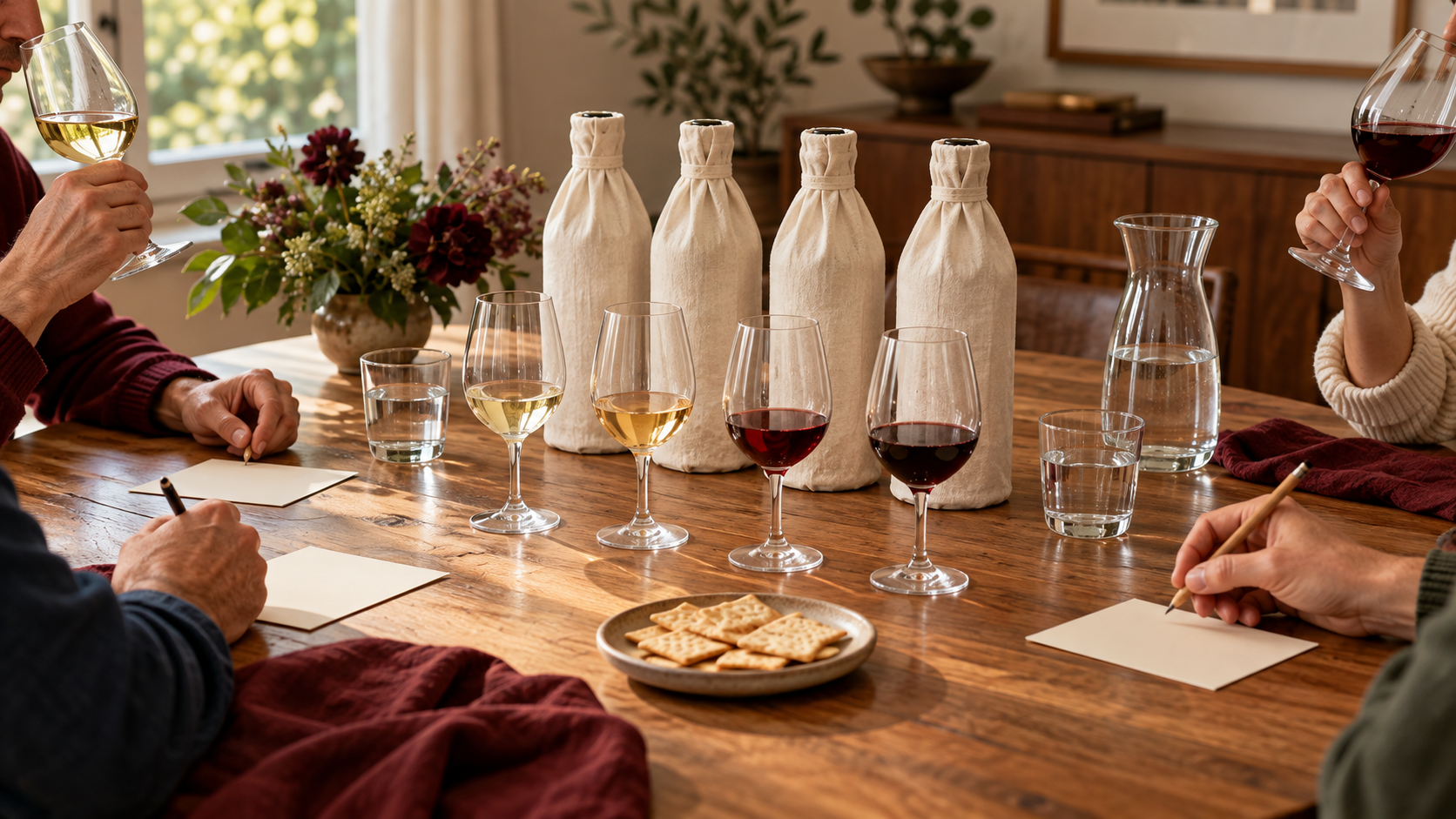
A blind tasting sounds serious until you remember what “blind” really means: you hide the labels, not your personality. Without a familiar name or price steering the conversation, everyone gets to notice what is actually in the glass. The goal is not to identify a vineyard at twenty paces. It is to compare, describe and discover.
For a first gathering, invite a few curious adults and choose three or four wines. That is enough contrast to make the exercise interesting without turning your dining table into an exam room. Ask guests to split the cost or give them a simple budget if they are bringing bottles.
Build the flight around one clear idea
A good theme gives the group something useful to compare. Try the same grape from three regions, one region represented by several grapes, or one style at different price points. WSET suggests keeping first-time tastings approachable with familiar grapes, regions or styles, then adding complexity as tasters gain confidence. [1]
Buy bottles close enough in price that cost does not dominate the reveal. Avoid making every wine a puzzle. If the group is new to tasting, tell them the theme before the first pour. Context can be more educational than a difficult guessing game.
Decide in advance whether you will taste whites, reds or a mix. If you combine styles, begin with the more delicate wines and keep the sequence consistent for every guest. Write that order on the hidden key so nobody has to improvise while pouring.
Hide the labels, keep the order
Ask one person to act as the keeper of the key. Cover each bottle completely with a plain bag, foil or a clean cloth sleeve, then mark the covered bottles with simple numbers. WSET includes wrapping, decanting and tasting bags among the practical ways to keep bottles blind. [1]
Use identical, clean glasses if you can. One glass per wine makes side-by-side comparison easiest; one glass per person also works if everyone rinses between pours and keeps notes. Set the table before guests arrive with water, plain crackers or bread, pencils and blank cards. UC Davis sensory sessions use water and crackers between samples and coded containers to track products without revealing their identity. [2]
Make the room help, not compete
Strong smells can obscure what is happening in the glass, so skip scented candles, perfume-heavy flowers and last-minute cleaning sprays. WSET advises tasting in a space free from strong odors such as air fresheners, food, tobacco and cleaning products. [3] Good natural or neutral light also makes it easier to look at color and clarity.
Keep food simple during the flight, then serve dinner or a cheeseboard after the reveal. A glass of water at every place and a comfortable pause between wines help the evening feel considered. The person pouring should use modest, consistent amounts so every guest has the same comparison.
Give everyone the same four prompts
A blank page can feel intimidating, so offer a short path through each wine: What do you notice first? Is the wine light, medium or full in body? Does it feel bright and fresh, soft and rounded, or firm and drying? Would you happily drink it again?
Let everyone write quietly before the conversation starts. This prevents the most confident voice from supplying the group’s answer. Then go around the table and invite one observation from each person. “I smell cherries” and “this reminds me of a cedar closet” can both be useful. The pleasure is in comparing perceptions, not policing vocabulary.
Reveal without declaring a winner
Before uncovering the bottles, ask guests to choose a favorite and guess only if they want to. Reveal one bottle at a time, then share the grape, region and price. Talk about surprises: Did the least expensive wine earn the most votes? Did the group agree on body but describe the aromas differently?
Finish by making room for guests who are not drinking or who stop early. NIAAA recommends offering appealing nonalcoholic choices, providing food and helping guests arrange safe transportation. [4] A tasting works best when participation never depends on finishing a glass.
The smartest result is not a perfect score. It is one new preference, one memorable comparison and a table full of people who leave feeling more curious than when they arrived.
Further reading
This original Wine Cognito guide combines our hosting suggestions with practical tasting guidance from WSET, UC Davis and the National Institute on Alcohol Abuse and Alcoholism.