How to Store Wine at Home (Without a Cellar)
A practical guide to protecting wine from heat, light and temperature swings—with or without a dedicated wine fridge.
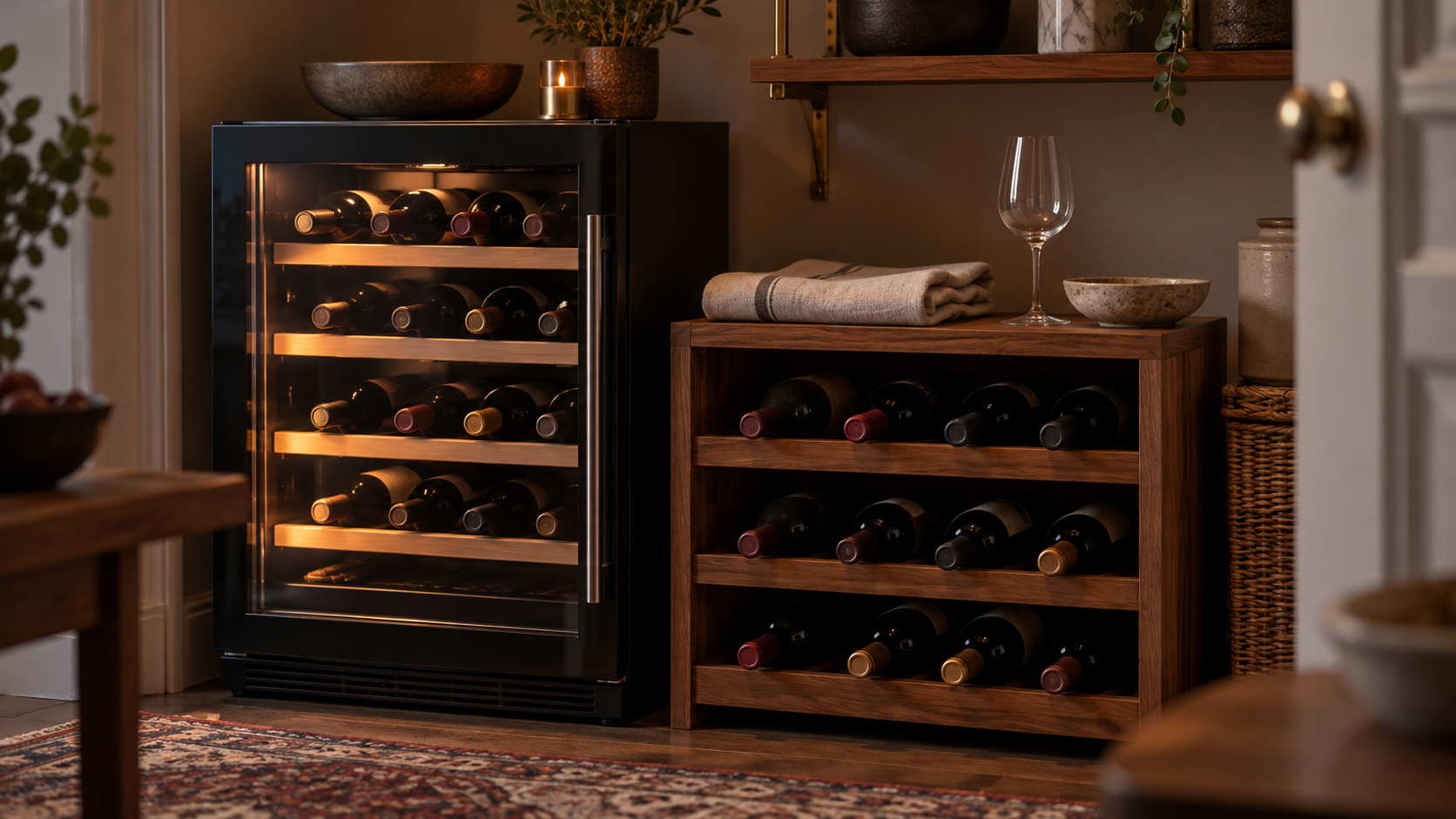
Most wine collections do not begin in a stone cellar. They begin with two bottles saved for dinner, one gift you are reluctant to open and a shelf that seemed sensible at the time. Good storage is less about owning an elaborate room than giving those bottles a cool, dark and steady place to wait.
The goal is simple: slow unwanted change. Wine continues to develop in the bottle, and storage temperature can influence that development and its potential shelf life. Research from the Australian Wine Research Institute found that even relatively small temperature differences can matter over time. [1]
Start with the coolest steady spot
Choose an interior closet, pantry or low cabinet away from ovens, radiators, heating vents and sunny windows. A comfortably cool room is preferable to a location that repeatedly heats and cools. The Wine & Spirit Education Trust recommends a regulated 50–59°F (10–15°C) for wine intended for long-term ageing. [2]
That range is a target, not a reason to panic over every degree. If you are keeping everyday bottles for a few weeks or months, prioritize consistency and avoiding heat. A dining-room cupboard that remains cool can be more useful than a kitchen rack beside the stove.
Keep bottles away from strong light
Dark glass offers some protection, but it does not make a bottle immune to light. WSET notes that strong direct light can harm a wine’s aromas and flavors and cause discoloration; sparkling wine is especially sensitive. [3] A closed cabinet, shaded closet or wine fridge with a solid or UV-resistant door is a better choice than a bright countertop display.
Store cork-finished bottles securely
For longer storage, the familiar horizontal rack is a practical default for bottles sealed with natural cork, and it uses space efficiently. Screw-cap bottles can stand upright without the same cork concern. Whatever the closure, prevent rolling and avoid a shelf where bottles will be bumped whenever you reach for a serving platter.
Scientists continue to study exactly how position affects different cork systems. A 24-month study of microagglomerated corks found no meaningful difference in oxygen transfer between horizontal and vertical storage under its test conditions, while high temperatures clearly increased transfer at the glass-cork interface. [4] The useful household lesson remains reassuringly ordinary: control heat first, then choose a stable arrangement that fits your bottles and space.
Know what your kitchen refrigerator can do
Your food refrigerator is excellent for chilling a bottle before serving and for keeping an opened bottle cold. It is less suited to ageing unopened wine for months. It runs colder than a wine-storage environment, and its shelves, vibrations and limited bottle space are designed for groceries.
If you keep more bottles than a cupboard can comfortably hold—or you want dependable conditions through summer—a dedicated wine refrigerator becomes useful. Look beyond the advertised bottle count. Large Burgundy- or Champagne-shaped bottles can reduce real capacity. Check the unit’s exterior dimensions, ventilation requirements, shelf spacing, noise expectations and whether it is designed for freestanding or built-in use.
One zone or two?
A single-zone wine fridge is often enough for storage. You can bring a white down to serving temperature in the kitchen refrigerator or let a red warm slightly after removing it. A dual-zone model is more convenient when you regularly want reds and whites ready to pour at different serving temperatures, but it is not automatically better for ageing.
Make the collection easy to use
Storage works better when you can see what you have. Keep everyday bottles within easy reach and place bottles meant for later in a separate row. A simple note on your phone—with the wine, vintage, location and occasion you had in mind—can prevent a forgotten bottle from becoming permanent furniture.
Review the list a few times a year. Most wine is made to be enjoyed relatively young, so do not assume that every bottle improves indefinitely. If a producer provides a drinking window, use it as guidance rather than treating the bottle as a trophy.
Before buying, count the bottles you actually keep and note their shapes. Choose enough capacity for modest growth, but do not pay for an impressive empty cabinet. The best storage system is the one that fits your room, stays steady and makes it easy to find the bottle you saved.
Further reading
This original Wine Cognito guide draws on wine-storage guidance and published research.