Wine and Cheese Pairing Without the Guesswork
A relaxed guide to pairing by freshness, intensity and contrast—without memorizing a complicated chart.
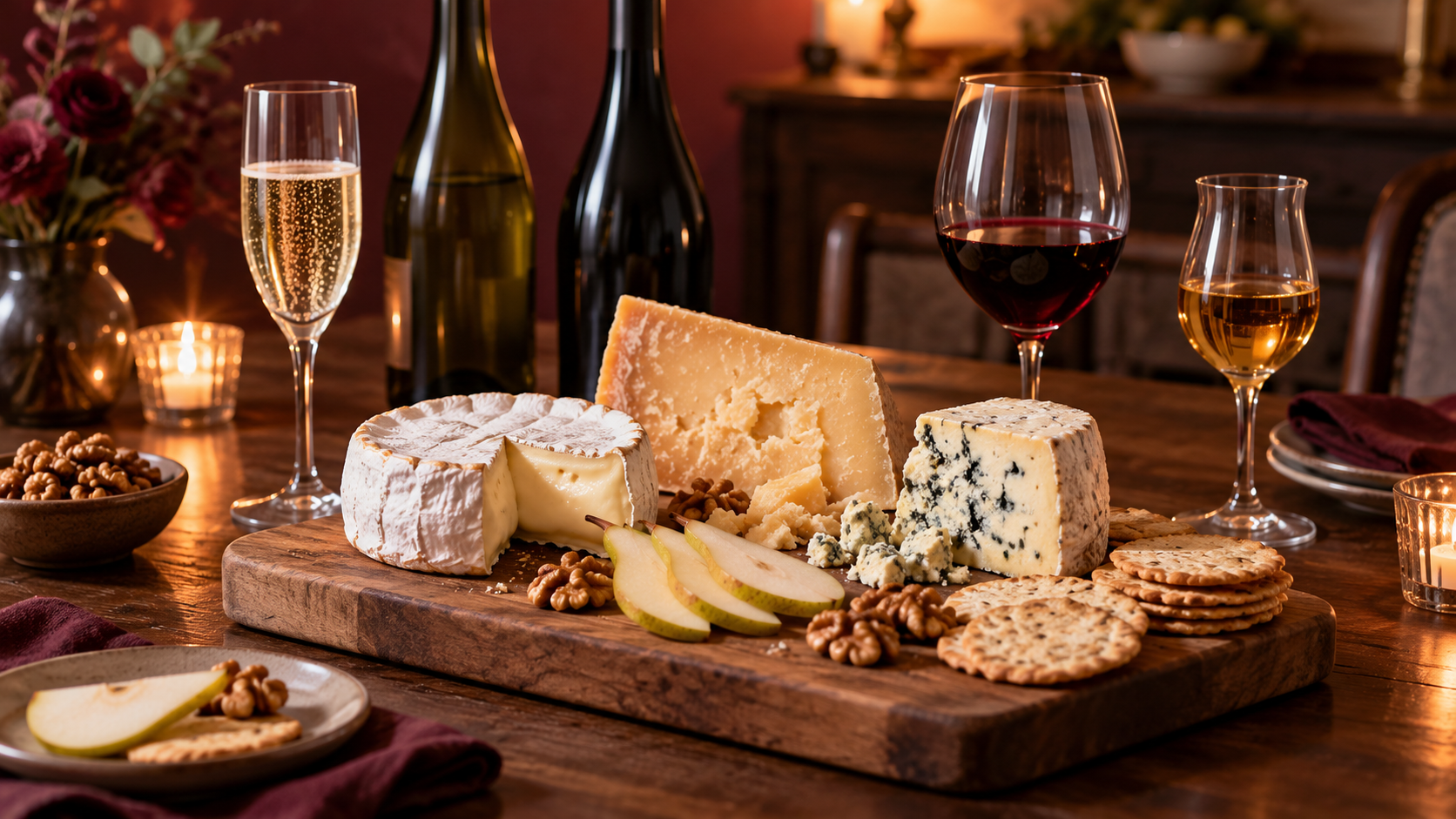
Wine and cheese pairing can sound like a test with one correct answer. It is closer to a conversation: one bite changes the next sip, and your favorite combination may not be the one a chart predicts. Begin with a few useful principles, then let the table decide.
That flexibility is supported by sensory research. Scientists have found that cheese can change how people perceive red wine, often reducing astringency and altering the intensity of particular flavors. At the same time, researchers caution that wine-and-cheese pairing is complex and that comparatively few controlled studies support the many rules found in popular guides. [1] [2]
Start with intensity, not color
A delicate cheese can disappear beside a powerful wine, while a pungent or deeply aged cheese can make a very light wine seem quiet. Match the general volume of the two. Fresh chèvre, ricotta or young mozzarella usually asks for a lively, lighter wine. Aged cheddar, Gruyère or Manchego can stand up to something fuller. Blue cheese is strong enough to meet a rich sweet wine.
This is a starting point rather than a commandment. The rind, age, salt and accompaniments can matter as much as whether the cheese came from a cow, goat or sheep.
Use acidity to refresh the palate
Rich, creamy cheese leaves a coating sensation. A wine with noticeable acidity can feel refreshing after it, which is why sparkling wine and bright whites are such useful partners for soft cheeses. Try dry sparkling wine with Brie or Camembert, or Sauvignon Blanc with fresh goat cheese. The pairing does not need matching flavors to work; contrast can provide the balance.
WSET describes acidity, salt and fat as a particularly useful trio: salty, fatty food can make an acidic or tannic wine seem smoother. [3] That helps explain why many cheeses make red wine feel less drying, but it does not mean every bold red is automatically ideal.
Be careful with tannin and delicate cheese
Tannin creates the drying, grippy sensation found in many red wines. Aged firm cheeses often have enough salt, concentration and texture to share the stage with a structured red. A very young, mild cheese may not. If Cabernet Sauvignon overwhelms the board, switch to a gentler red such as Pinot Noir or Gamay—or return to a crisp white.
Controlled tasting at UC Davis found that eating cheese before evaluating red wine tended to reduce several wine attributes, including astringency, rather than revealing one universally superior match. [1] The practical takeaway is liberating: taste the combination instead of trusting the prestige of either item.
Let sweetness answer salt
Blue cheese offers a vivid lesson in contrast. Its salt and bold flavor can be balanced by a wine with real sweetness and enough acidity to stay lively. Port and blue cheese are familiar partners; sweet Tokaji is another classic option recognized by WSET. [4] Make sure the wine is genuinely sweet. A merely fruit-scented dry wine may taste sharper beside the cheese.
Keep the board simple
Three cheeses are enough for a useful tasting. Set them out in a gentle sequence—fresh or soft first, aged next, blue last—and provide a separate knife for the blue so its assertive flavor does not travel. Plain bread or crackers reset the palate better than heavily seasoned ones. Pear, apple, walnuts or a small spoonful of honey can add contrast, but too many extras make it harder to notice what the wine and cheese are doing.
Serve modest pours and keep water on the table. Give refrigerator-cold cheese a little time to lose its chill, but follow food-safety guidance and do not leave it out indefinitely. Most important, taste twice: once before the cheese and once after. If the wine becomes harsher, flatter or less interesting, try another pairing. If both remain distinct and you want another bite, you have found a match worth repeating.
The best pairing is not the one with the most impressive names. It is the one that makes your table feel generous, curious and easy to enjoy.
Further reading
This original Wine Cognito guide draws on wine-education guidance and sensory research.