Wine Serving Temperature: A Little Chill Goes a Long Way
Simple adjustments for reds, whites and sparkling wine, without turning dinner into a science project.
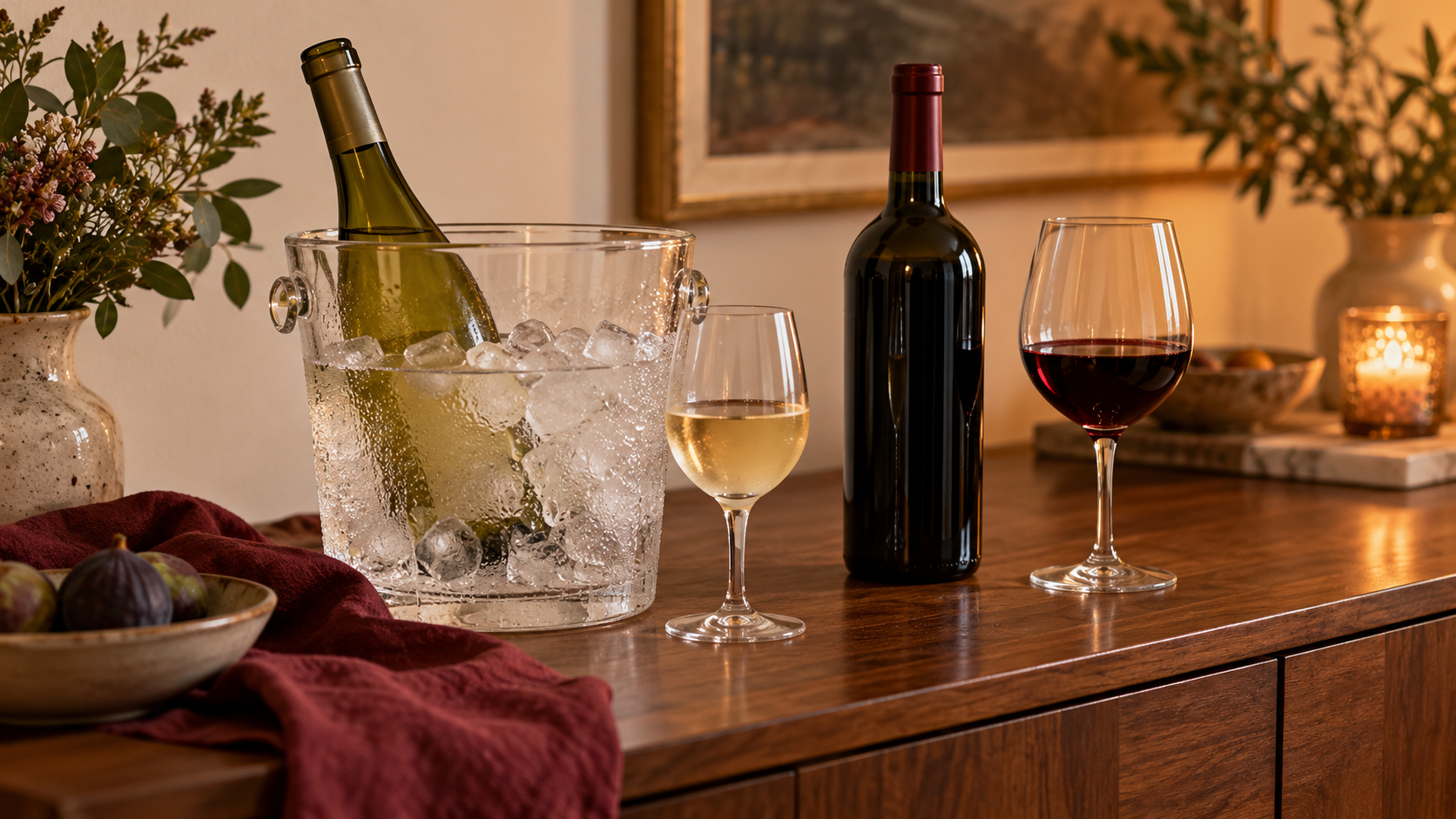
You open a bottle you liked last month, pour a glass and wonder what happened. The red seems heavy. The white barely smells of anything. Before blaming the bottle, consider its temperature. A small adjustment may be all the wine needs, and it costs considerably less than buying another gadget.
Serving temperature is not a test of sophistication. It is one more way to make the wine you already own enjoyable. Start with the bottle’s style, use a sensible temperature range and let your own preferences have the final word.
Rethink “room temperature”
A comfortable living room is not necessarily a comfortable setting for red wine. WSET places the traditional room-temperature range for fuller reds at about 59–64°F (15–18°C), cooler than many heated homes. Above that range, a red can seem less fresh. [1]
If your bottle has been sitting near the kitchen while dinner cooks, give it a short stay in the refrigerator, then check it again. Treat the first taste as a checkpoint rather than a commitment. There is no need to make the entire bottle refrigerator-cold.
Give lighter reds permission to be cool
Chilling red wine is not a mistake. WSET specifically suggests experimenting with lighter, lower-tannin styles such as Beaujolais and Pinot Noir. It gives a broader red-wine serving range of 55–64°F (13–18°C). [2]
Try the cooler end with a light, juicy red and a little more warmth with a fuller, structured one. Those are useful experiments, not promises about every bottle bearing the same grape name. Taste before and after the adjustment. Ask a simple question: do you want another sip?
Chilled does not have to mean icy
White wines need different treatment, too. WSET suggests about 50–55°F (10–13°C) for a fuller white such as oaked Chardonnay, with lighter whites served cooler. It also notes that temperatures below 43°F (6°C) can hide flavors in white, rosé and sparkling wines. [1]
Instead of memorizing a separate number for every grape, write a three-part note for tonight: which bottle needs chilling, where you will keep it and when you will taste it. Check the producer’s serving advice if the label offers any. This turns an abstract temperature chart into a small, useful plan that fits the meal you are actually making.
If a cold white seems nearly scentless, leave a small pour in the glass and revisit it as it warms. Compare that with a fresh pour from the bottle. You can learn more from this tiny side-by-side experiment than from memorizing ten temperatures.
Put water in the ice bucket
An ice bucket works better when water fills the spaces between the ice and bottle. WSET recommends an ice-and-water mixture so chilled water surrounds the bottle; ice alone leaves insulating air gaps. [1] Leave enough room to lower the bottle without overflowing the bucket.
Choose a stable container and keep a folded cloth nearby for drips. A cooler sleeve can be convenient when table space is limited, but follow its preparation instructions. The useful accessory is the one that fits your evening, whether that means a bucket beside a shared table or a sleeve around one bottle.
Use a thermometer as a guide, not a referee
A clean, food-safe probe can help you learn what different temperatures feel like; follow its instructions and avoid treating an outside-bottle reading as an exact liquid temperature. You do not need a new device for tonight’s dinner. Small pours, a refrigerator and a little attention are enough to begin.
Check again when you refill. A bottle left on the table does not stay at its starting temperature, and serving smaller amounts gives you more control. Avoid trying to warm wine with a radiator, microwave or hot-water shortcut. Gentle adjustment is the point.
If one guest likes a warmer glass, let that glass rest while keeping the bottle cool for everyone else. Hosting is easier when the equipment supports the conversation instead of becoming its main subject.
Keep a note when you find a combination you like: the bottle, how you chilled it and what worked. Next time, begin there. The goal is not a flawless number. It is a glass that tastes inviting from the first sip to the last.
Further reading
This original Wine Cognito guide draws on wine-service guidance from the Wine & Spirit Education Trust. Suggested ranges are starting points, not rules about personal preference.